
About tDCS
What is tDCS?
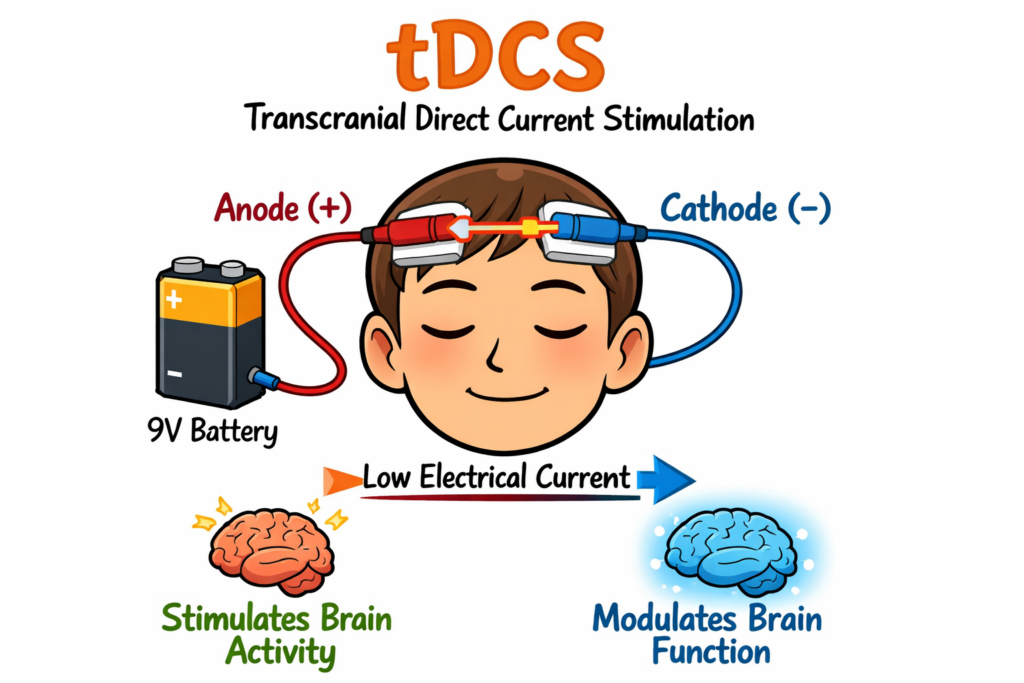
tDCS stands for transcranial direct current stimulation, a non-invasive neuromodulation technique that stimulates the brain using weak electric current (not more than 2 mA). The current is delivered from a power source, typically a battery, through two electrodes – an anode and a cathode – placed on the scalp.
How does it work?
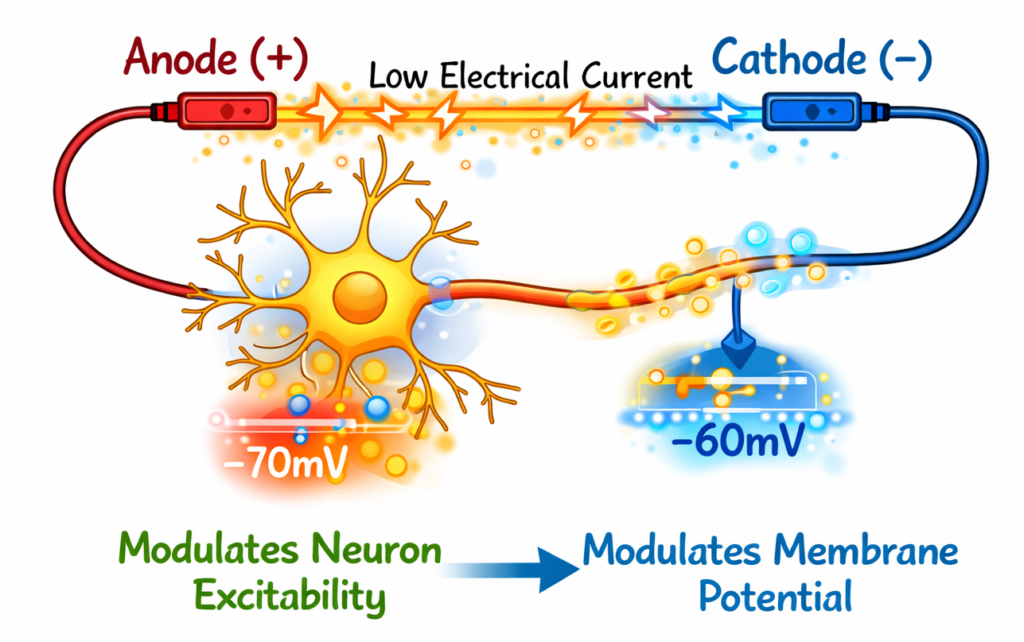
The low intensity electric current alters cortical excitability by changing the neuron’s resting membrane potential. Depending on the configuration of the electrodes, this can either increase or decrease neuron excitability.
Anodal stimulation increases cortical excitability. In other words, this would be akin to stimulating brain activity to increase neuronal activity. On the other hand, cathodal stimulation decreases cortical excitability, thus inhibiting neuronal activity.
Is tDCS safe?
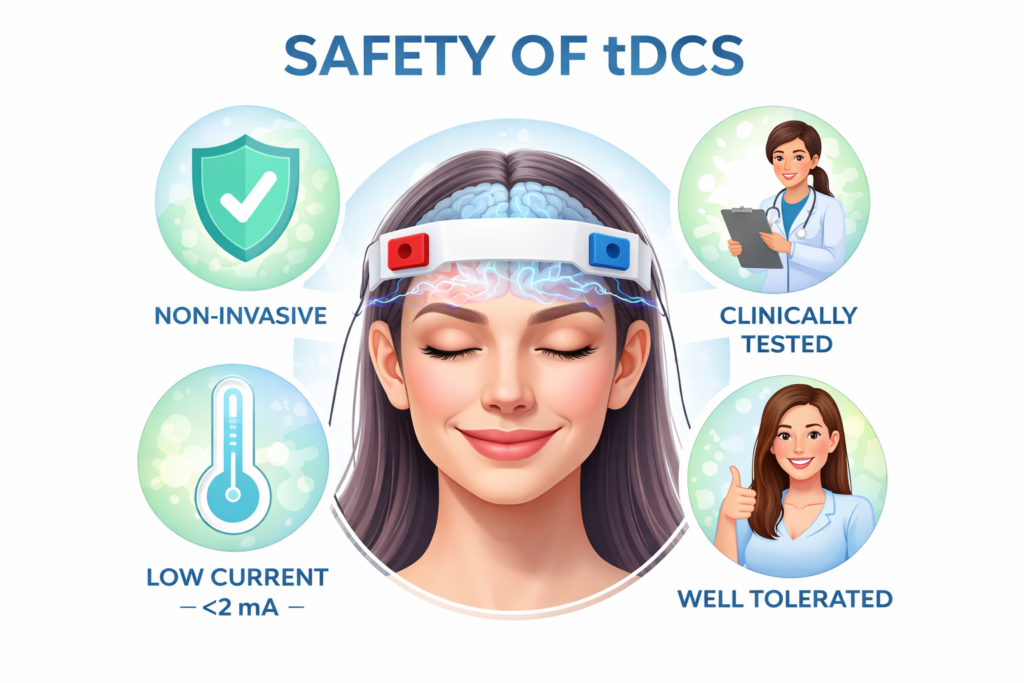
tDCS is generally considered to be safe. It is non-invasive and the low intensity current (< 2 mA) has been shown to not cause severe effects. Side effects from tDCS are mild, such as itching, mild burning sensation and redness of skin are typically well-tolerated. A study1 documenting effects of tDCS revealed that tDCS presents no adverse effects, with skin discomfort being the most common.
1. https://www.sciencedirect.com/science/article/pii/S2467981X16300233
How does a typical tDCS session look like?
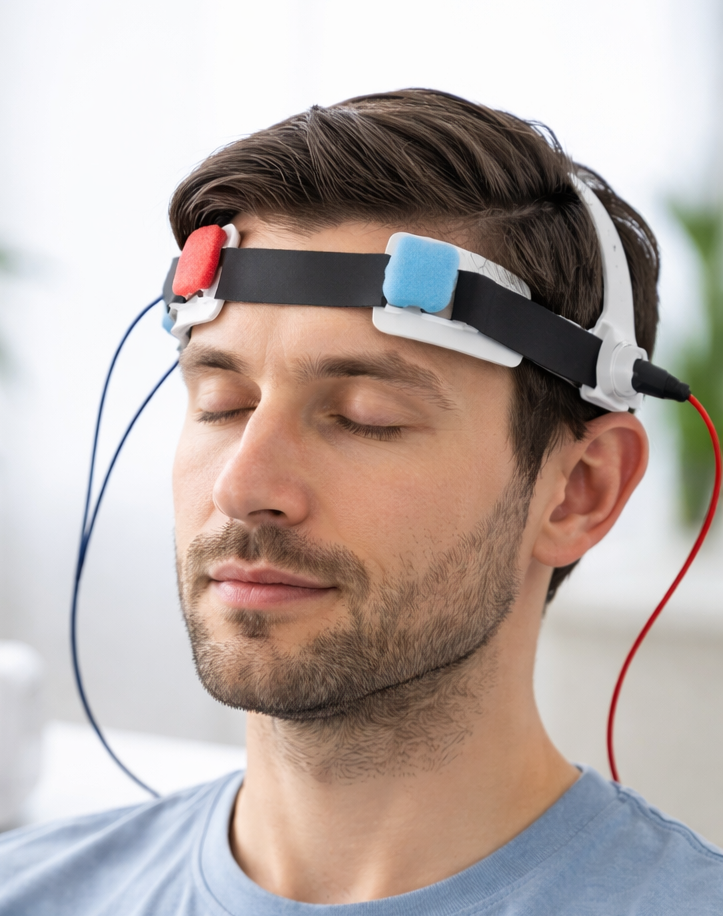
Two electrodes will be positioned appropriately and across your scalp and held in place by throughout the entire session. The electrodes are connected to a device that provides the low intensity current to the electrodes. A typical tDCS session lasts for about 20 minutes and only one session per day is sufficient for a positive outcome.